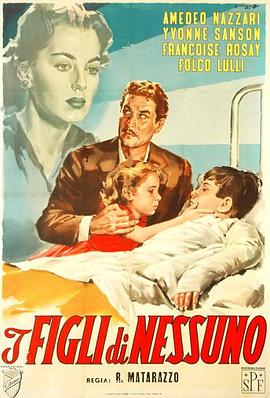
The tragic love story between Guido, the owner of a marble quarry and Luisa, the humble daughter of one of his employees, ends up in her giving birth to a baby boy. Giulio's mother is against them at first she takes her son abroad with an excuse and then has her grandson kidnapped making Luisa think the boy died in a fire.
Didier Konings’ simmering mediaeval horror Witte Wieven explores the confluence of religion and patriarchy in an excessively puritanical Dutch village. Blamed by her community for being childless, Frieda immerses herself in prayer and ritual. When she returns unscathed from the forbidden forest surrounding the village, having evaded a lecherous butcher, she is condemned as an agent of the devil. Frieda, however, finds new faith in the dark powers that inhabit the woods.
Shot in a reduced colour palette at the edge of visibility, Konings’ gripping film constructs a convincing pre-modern society whose practices it elucidates with patience and attention. Although set in the Middle Ages, Witte Wieven displays an unmistakably contemporary spirit, crafting a feminist parable about women discovering new ways of understanding their lives and the world.
The film is inspired by the true-to-life story of the discovery of the long-lost “Opus 28” manuscript from Norwegian composer Johan Halvorsen, originally performed in 1909 by Canadian violinist Kathleen Parlow, to whom the piece was dedicated.
Campbell portrays a student who seeks to complete her thesis on Parlow by organizing a public performance of “Opus 28” from Toronto to Oslo. The cast includes Dueñas, Melanie Scheiner, Eve Duranceau, Maxim Gaudette, Rosa-Johan Uddoh, and Eileen Davies.
Debt-ridden pacifist Richard Fyre is propositioned to return to his abandoned mercenary ways by flamboyant zealot, Priest, to eliminate his international competition in exchange for a clean slate.
 剧情介绍
剧情介绍
 猜你喜欢
猜你喜欢


 热播榜
热播榜
 最近更新
最近更新
 友情链接
友情链接