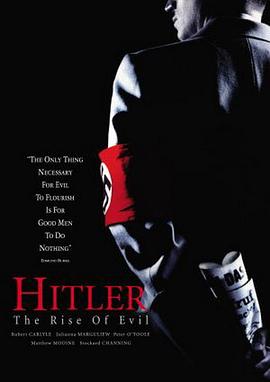
阿道夫·希特勒(罗伯特·卡莱尔 Robert Carlyle 饰)从童年开始就想成为一名艺术家,然而专横的父亲却一直在阻断他的梦想。年满18随后,失去父亲后的希特勒终于可以追逐艺术之梦了,怎奈他的天赋有限,无奈成为了一名落榜生。走入社会,希特勒见识到了社会种种不公,也被充满激情的演说所感染。一战爆发,希特勒参军走上战场,经历了战火的洗礼,让这个年轻人心中的愤怒无限增长。一战结束后,作为战败国的德国经济几近崩溃。在此期间,希特勒奉命前往工人党的集会中做卧底,而就在这里,他发表了针对犹太人的激情演说。正是这次演讲,让希特勒发现了自己的演讲天赋。
在此之后,恶魔开始了传奇的崛起之路……
In 2013, an Australian man a few months shy of turning 60 decided to walk the Camino de Santiago – an 800km pilgrimage trail across the top of Spain. He had no known religion, and absolutely no idea why he felt so deeply compelled to do this torturous walk. But compelled, he was. He completed the walk, battling a “triumvirate of pain” - a knee that he later discovered lacked an...
Calvin Trask lives in a dead end Arctic town on the fringes of society, until mysterious stranger Lucas Wade arrives, turning his solitary life upside down. Calvin's curiosity gets the better of him and is quickly pulled into Lucas' dangerous world. As secrets slowly unravel, Calvin realises just what kind of jeopardy he's put himself in, a place where murder and betrayal are a...
In 2013, an Australian man a few months shy of turning 60 decided to walk the Camino de Santiago – an 800km pilgrimage trail across the top of Spain. He had no known religion, and absolutely no idea why he felt so deeply compelled to do this torturous walk.
But compelled, he was.
He completed the walk, battling a “triumvirate of pain” - a knee that he later discovered lacked any meaningful cartilage, a blister the sight of which would make a grown man weep, and shin-soreness that felt like his lower limb had been split with a mountain axe wielded by a demented troll.
Arriving at the end of the Camino, the majestic cathedral in Santiago de Compostela, he expected an epiphany – an answer to the question he’d been asking himself every day: Why am I doing this?
But no answer came.
So when he got home he wrote a book, hoping the answer would reveal itself in his scribblings. The result was The Way, My Way, a humourous and self-deprecating book that many consider the best memoir ever written on walking the Camino.
The book has now been made into a film, and it’s an extraordinary account of a man at a pivotal point in his life, searching for meaning and finding himself undergoing a fundamental transformation so profound that he now divides his life into “Before the Camino” and “After the Camino.”
It’s a story particular to one man, yet of appeal to anyone seeking a greater meaning from life.
Fleeing from their violent father, siblings Lucía and Adrián take refuge in a remote mansion. With the help of a hidden micro-camera on a cat, Lucía uncovers a terrifying secret: their neighbors are part of a criminal network that kidnaps teenage girls to make snuff films, and they intend to get rid of the siblings. As Lucía fights to protect her brother, she must face a dark family curse that follows them into their newfound sanctuary.
Фільм розповідатиме про двох «ворогів дитинства», останніх мешканців невеликого села, які лишилися жити в «сірій зоні» поблизу лінії фронту. «Мало зважаючи на воєнні події, вони намагаються створити своє мирне життя в небезпечній місцині, але все руйнується, коли в селі з’являється російський снайпер»,
When, at the beginning of Deus Irae, Father Javier stares at a crucifix, his expressions and his hands suggest that the nerves are consuming him. A flashback reveals that this priest devotes his life to visiting families that claim to have seen things that do not belong to this world and cleansing their homes from the demons that try to possess them. But, upon returning to those houses, he notices that the evidence is always destroyed. This way, he discovers that a clan is after him, and must decide whether to hide from them or join them. In times when horror cinema tends to fall into the hands of directors that seek to build narratives that are introspective and close to reality, Pedro Cristiani goes back to old-school horror, where gore and the physical experience are above any other kind of feeling. A cinema that places the camera in front of the faces of the bloodiest demons and, instead of giving logic to them, chooses to face them whatever the cost.
Didier Konings’ simmering mediaeval horror Witte Wieven explores the confluence of religion and patriarchy in an excessively puritanical Dutch village. Blamed by her community for being childless, Frieda immerses herself in prayer and ritual. When she returns unscathed from the forbidden forest surrounding the village, having evaded a lecherous butcher, she is condemned as an agent of the devil. Frieda, however, finds new faith in the dark powers that inhabit the woods.
Shot in a reduced colour palette at the edge of visibility, Konings’ gripping film constructs a convincing pre-modern society whose practices it elucidates with patience and attention. Although set in the Middle Ages, Witte Wieven displays an unmistakably contemporary spirit, crafting a feminist parable about women discovering new ways of understanding their lives and the world.
 剧情介绍
剧情介绍
 猜你喜欢
猜你喜欢


 热播榜
热播榜
 最近更新
最近更新
 友情链接
友情链接